Technologies
Oxygen Delivery (DO2) Monitoring
Continuous, Beat-to-Beat Assessment of Tissue Oxygen Supply
Monitor and trend continuous oxygen delivery (DO2) that takes into account real-time changes in both cardiac output and arterial oxygen content by integrating Masimo LiDCO® hemodynamic monitoring with noninvasive rainbow SET® on the Root® platform.
Understanding Oxygen Delivery
Oxygen delivery (DO2) is the total volume of oxygen transported from the lungs to the systemic circulation (the tissues) per minute. It reflects the combined output of the cardiovascular system (how much blood is pumped) and the respiratory/hematologic system (how much oxygen that blood carries). DO2 is one half of the fundamental system of oxygen-transport balance – supply (DO2) vs. demand (VO2) – that underlies tissue oxygenation.
In competitor technologies, DO2 monitoring is limited because it relies on intermittent laboratory measurements to establish arterial oxygen content (CaO2) – a crucial part of the DO2 calculation – under the assumption that CaO2 is mostly static, when in fact it can change between intermittent blood samples.
Noninvasive Masimo technology can capture those changes – and combine that data with hemodynamic monitoring. Root brings together Masimo LiDCO®, SpHb®, and SET® on a single platform to offer the first and only DO2 assessment that reflects beat-to-beat changes in both cardiac output and arterial oxygen content – allowing clinicians to continuously monitor and trend changes in DO2 in real time.
(O2 loading)
(O2 transport)
(O2 unloading)
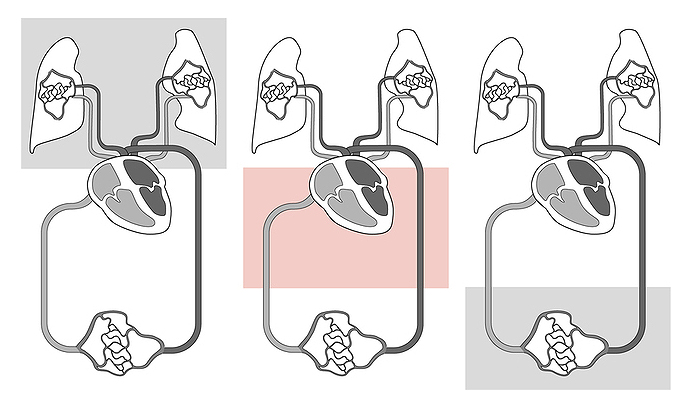
How Is DO2 Calculated?
DO2 is derived from cardiac output (CO) and arterial oxygen content (CaO2):
DO2 = CO × CaO2 × 10
Arterial oxygen content is itself calculated using hemoglobin (Hb), arterial oxygen saturation (SaO2), and a small dissolved-oxygen component (PaO2):
CaO2 = (Hb × 1.34 × SaO2) + (0.003 × PaO2)
Indexing DO2 to body surface area (DO2i) allows values to be compared meaningfully across patients of different sizes.
A commonly cited normal range for DO2i is approximately 500–600 mL/min/m².
Components of DO2
- Cardiac Output (CO): The volume of blood the heart pumps per minute (heart rate × stroke volume). CO is the circulatory driver of DO2. It rises with adequate preload, contractility, and heart rate, and falls with hypovolemia, poor cardiac function, or bradycardia.
- Hemoglobin (Hb): The concentration of the protein that carries most of the oxygen in blood. Because each gram of Hb can carry 1.34 mL of oxygen when fully saturated, Hb is often the single largest lever on oxygen-carrying capacity, which is why anemia can meaningfully reduce DO2 even when CO and oxygen saturation are normal.
- Arterial Oxygen Saturation (SaO2/SpO2): The percentage of hemoglobin binding sites occupied by oxygen, measured centrally (SaO2, from an arterial blood gas sample) or peripherally (SpO2, by pulse oximetry).
- Dissolved Oxygen (PaO2): A small amount of oxygen (about 0.003 mL per dL of blood per mmHg of PaO2) travels dissolved directly in plasma rather than bound to hemoglobin. Under normal conditions this contributes only a minor fraction of total oxygen content, but it becomes proportionally more relevant during hyperoxia or severe anemia.
Clinical Evidence
Reduced Mortality with Preoperative DO2 Optimization
In a randomized controlled trial of 138 patients undergoing major elective surgery, preoperative optimization of oxygen delivery reduced mortality from 17% in the control group to 3% in the preoptimized group (P = 0.007).1
Mortality: Major Elective Surgery
(Wilson et al., BMJ 1999)
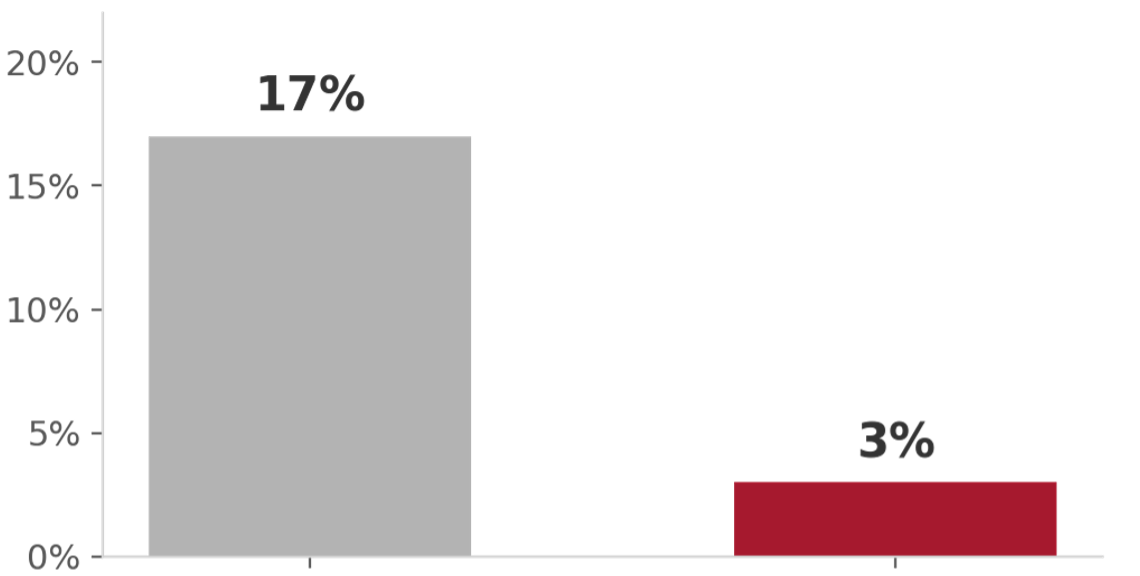
Control
Preoperative DO2
Optimization
Reduced 28-Day Mortality with DO2-Guided Goal-Directed Therapy
In a randomized trial of 107 high-risk surgical patients, deliberately increasing oxygen delivery to a target of >600 mL/min/m² using dopexamine reduced 28- day mortality by 75% relative to standard perioperative care.2
Resources
Need more information? Below are key resources about Oxygen Delivery (DO2)Monitoring
Schedule an Evaluation
See how Oxygen Delivery (DO2) Monitoring can make a difference in your healthcare organization. Please fill out the following information and a Masimo representative will be in touch with you.
Woods et al. Reducing the risk of major elective surgery: randomized controlled trial of preoperative optimization of oxygen delivery. BMJ. 1999;318(7191):1099-1103.
Boyd et al. A randomized clinical trial of the effect of deliberate perioperative increase of oxygen delivery on mortality in high-risk surgical patients. JAMA. 1993;270(22):2699-2707.
PLCO-008267/PLM-15569A-1026